
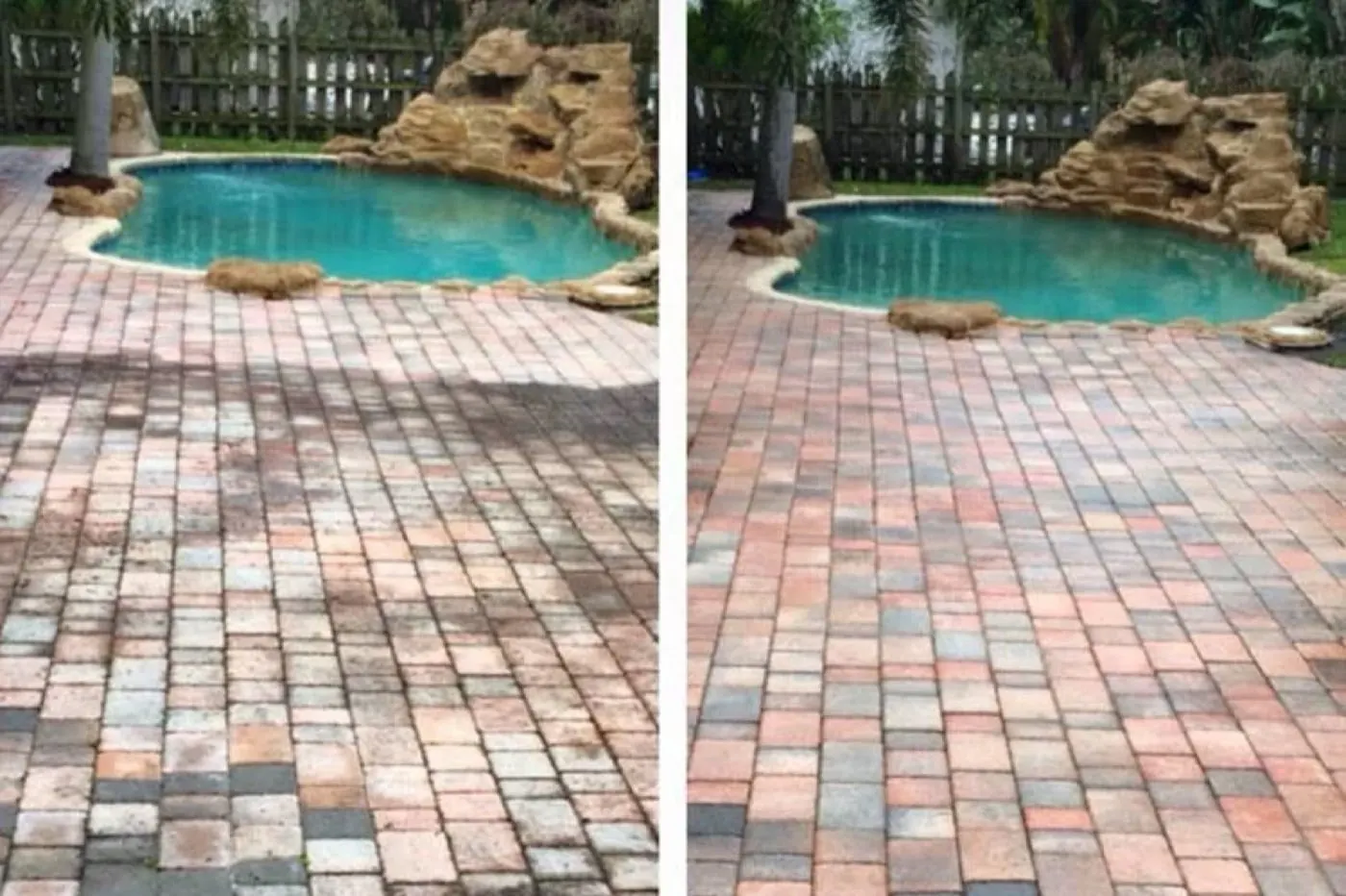
Paver clean & seal — Lake Norman, NC
Paver cleaning & sealing
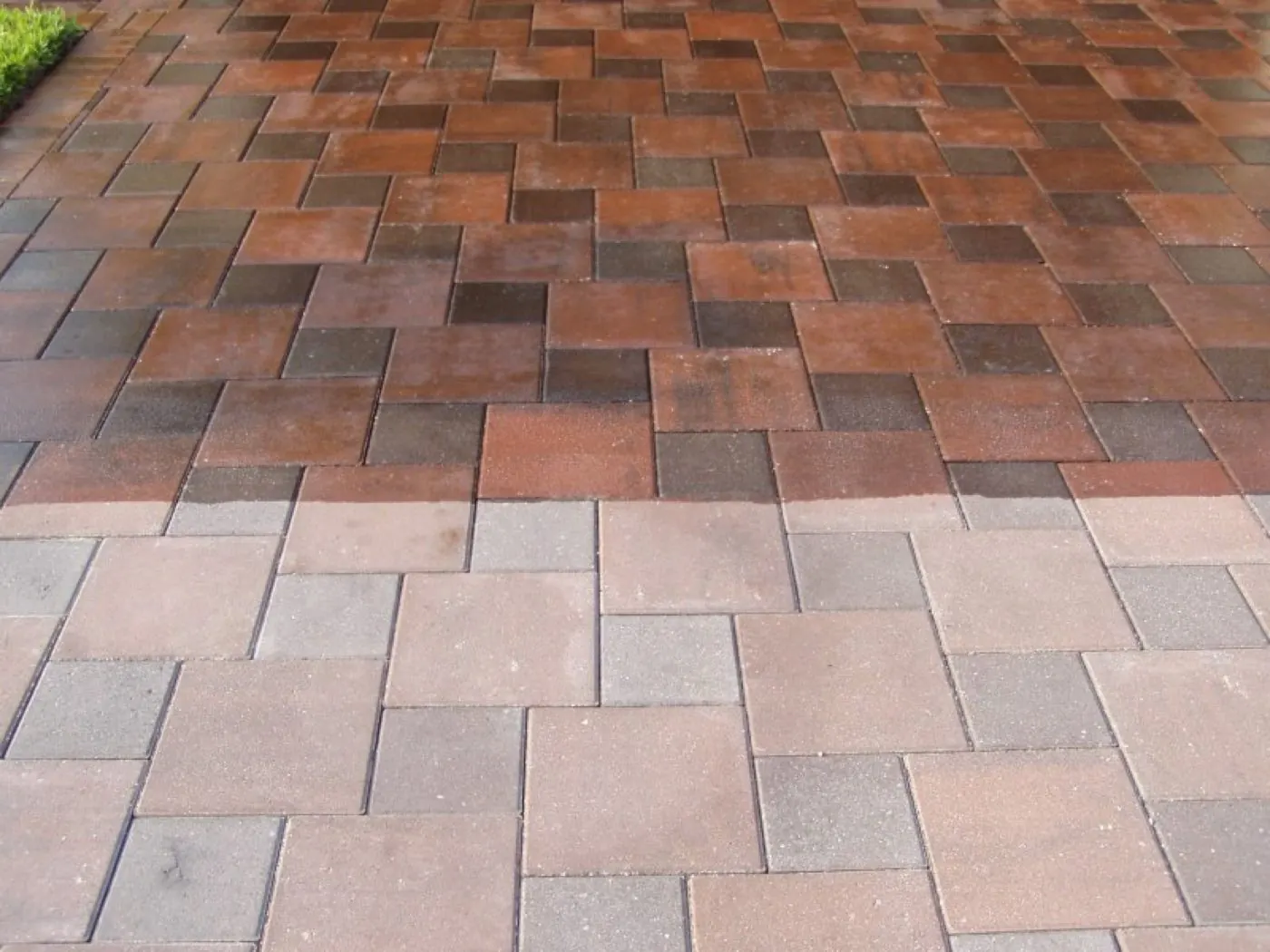
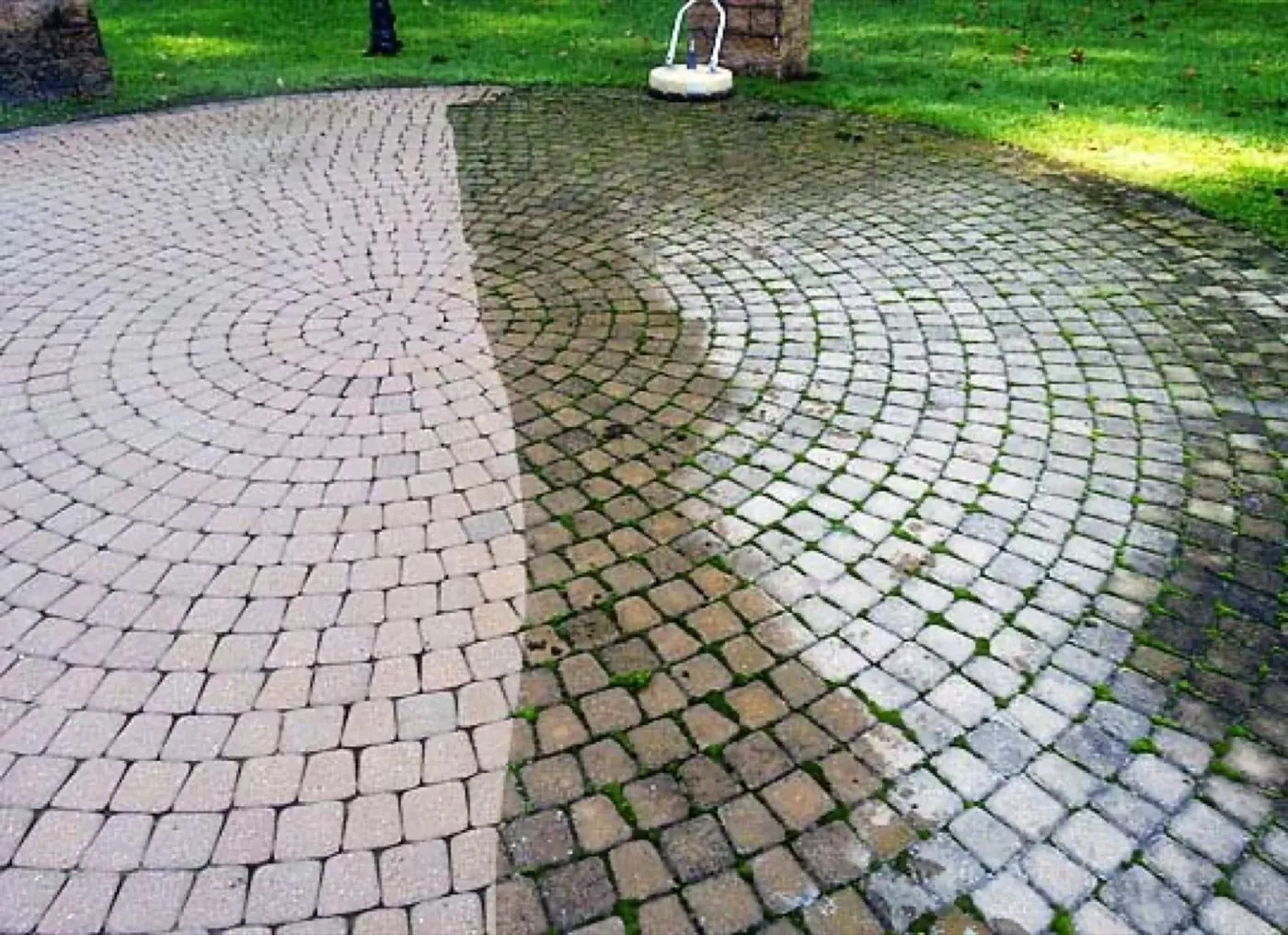
Deep cleaning, re-sanding and a breathable sealer that brings the colour back and keeps weeds, mould and stains out of the joints.
(01) What it does
What paver cleaning and sealing does, and what it does not.
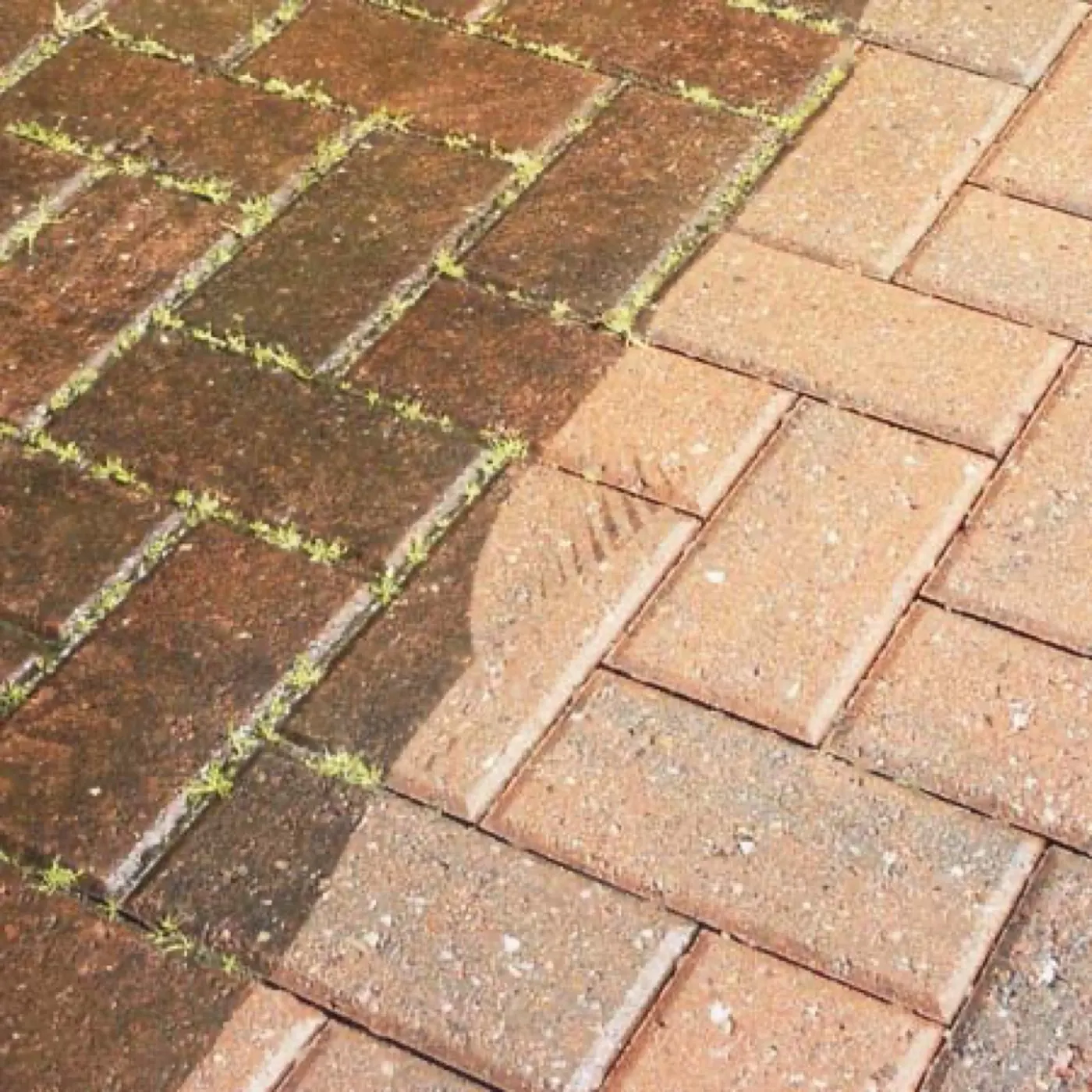
Concrete pavers are porous. Left bare they drink in rain, grease from the grill, tannin from leaves and the red dust that blows off every Carolina building site. Algae and mould grow in the shade, weeds root in the joints, and the colour that looked so rich on the pallet fades a little every summer.
Cleaning strips all of that back to the paver. Sealing then fills the pores so the next spill sits on the surface long enough to wipe up, slows UV fading, and, applied over fresh polymeric sand, locks the joints so weeds and ants have nowhere to start.
What it does not do is fix a bad installation. Sealer will not level a sunken paver, close a joint that opened because the edge restraint failed, or stop a patio settling into a low spot. Those are base problems. We fix the small ones as part of the job and tell you honestly when a section needs relaying on a rebuilt base.
(02) Our process
Paver sealing done step by step.
Most sealing jobs that go wrong were rushed. Ours runs in a fixed order, usually over two visits, because the pavers must be genuinely dry before sealer goes on.
- Inspection. We identify the paver type, whether it has been sealed before, any sunken or rocking units, open joints and stains, and how far the surface is from the trailer and a water supply.
- Pre-treatment. Oil, rust, tannin, mould and efflorescence each need a different cleaner. We treat stains individually before the general wash so they lift rather than spread.
- Surface cleaning. A rotary surface cleaner on a pressure washer gives an even, deep clean without the stripes and etching a bare wand leaves. Old joint sand and organic growth wash out with the dirt.
- Re-levelling. Where individual pavers have sunk or tipped, we lift them, correct the bedding and reset them flush. Larger settled areas are quoted separately as a relay.
- Polymeric joint sand. Once the surface is dry we sweep polymeric sand into every joint, compact it, blow the surface clean and mist it to activate the binder. This is what stops weeds and locks the field together.
- Dry time. Pavers and sand must be dry to the depth the sealer will reach. In our climate that often means coming back the next day, not the same afternoon.
- Sealer application. Applied evenly with a sprayer and back-rolled so it soaks into the paver and the joint sand rather than pooling on the surface.
- Cure. Foot traffic after 24 to 48 hours for water-based products, up to 72 for solvent-based. We leave you written cure times for furniture and vehicles.
(03) Sealer types
Choosing the right paver sealer.
Water-based or solvent-based. Water-based sealers are breathable: moisture that gets into the paver or the base can escape through the film rather than being trapped beneath it. National guides published in 2026 put them at roughly $42 to $70 a gallon. Solvent-based sealers run about $32 to $55 a gallon and give a deeper gloss, but they can haze white if any moisture is trapped underneath, a real risk on clay ground that stays damp. We use breathable water-based products on most residential work.
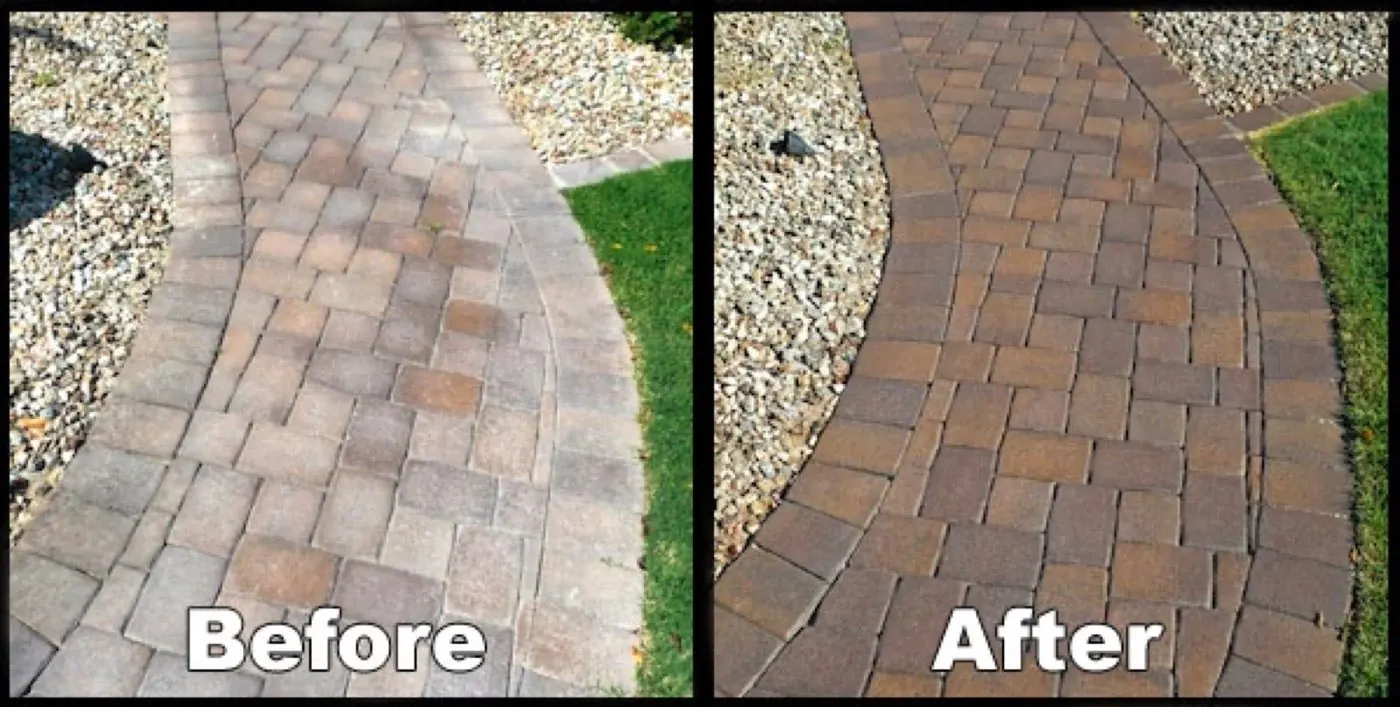
Wet look or natural matte. A wet-look sealer darkens the paver and adds sheen, which brings out colour on a driveway or a formal patio. A natural matte finish protects without changing the look, which suits tumbled or textured pavers and anywhere the stone is meant to read as stone. Both are available with the joint-sand stabilising additive.
Why we avoid high gloss on pool decks and steps. High-gloss films are slick when wet. Around a pool, on steps, or on any walkway that gets rain and shade, that is a slip hazard, and no amount of colour enhancement is worth it. A matte or low-sheen sealer with a grip additive is the right choice there, and we will say so.
(04) Timing
When to seal, and how often in the Carolinas.
New pavers. Seal them, but not straight away. New concrete pavers release efflorescence, a white mineral bloom, as rain moves through them over the first weeks to months. Sealing over it traps it under the film. We let a new paver patio weather through a few rain cycles, clean any bloom off, and then seal.
Re-sealing. National guides published in 2026 suggest re-sealing every 3 to 5 years, or 2 to 3 in hot, humid climates. Lake Norman summers put us in the second group, so we recommend about every 3 years, sooner on a pool deck or a shaded north-facing patio where algae keeps returning. Re-coating on schedule is cheaper than stripping a failed film later.
Signs it is time. Water no longer beads on the surface. Colour has gone flat and dusty. Joint sand is washing out or weeds have found the joints. Green or black growth returns within a season of being washed. Any one of these means the sealer has worn through.
We go deeper on all of this in our guide to when to seal pavers and how often to re-seal.
(05) Common mistakes
What goes wrong with DIY paver sealing.
Sealing looks simple, and a fair share of our calls are to put right a weekend job. The same three problems come up over and over.
- White haze. Sealer applied over pavers that were still damp inside, or sealed in the humid part of the day. Trapped moisture turns the film cloudy, and on solvent-based products it can take stripping to fix.
- Sealing over failing sealer. A fresh coat on top of a film that is already peeling bonds to the old film, not the paver, and peels with it. Old failed sealer has to be stripped first.
- No re-sanding. Pressure washing blows the joint sand out. Sealing without refilling the joints leaves them open to weeds and lets the pavers shift. The polymeric sand step is not optional.
Add uneven spraying that leaves lap marks, sealer pooled in low spots, and consumer-grade products never rated for a driveway.
(06) Cost
What paver cleaning and sealing costs.
National cost guides published in 2026 put professional paver cleaning, re-sanding and sealing at roughly $1.50 to $3.25 per square foot. Small jobs under 500 square feet tend to sit at $2.20 to $3.25, mid-sized areas of 500 to 2,000 square feet at $1.75 to $2.95, and large driveways over 2,000 square feet at $1.50 to $2.20. Another national guide reports most projects landing between $300 and $550, at around $2 per square foot.
What moves your number within those ranges: how stained or mossy the surface is, how many pavers need re-levelling, joint width and how much polymeric sand it takes, distance from water and the trailer, and whether old sealer must be stripped first. We price after a site visit, in writing, with the sealer named on the quote.
(07) Natural stone
Travertine and natural stone need a different sealer.
Everything above applies to concrete and clay pavers. Travertine, flagstone and other natural stone breathe differently and take a penetrating stone sealer that soaks in rather than forming a film. Put a paver topcoat on travertine and it can trap moisture, blotch and peel within a season. We match the product to the stone and test a patch first.
We clean and seal brick paver patios, paver driveways, walkways and pool surrounds across the Lake Norman area, whether we installed them or not.
Clean & seal work
Start your project →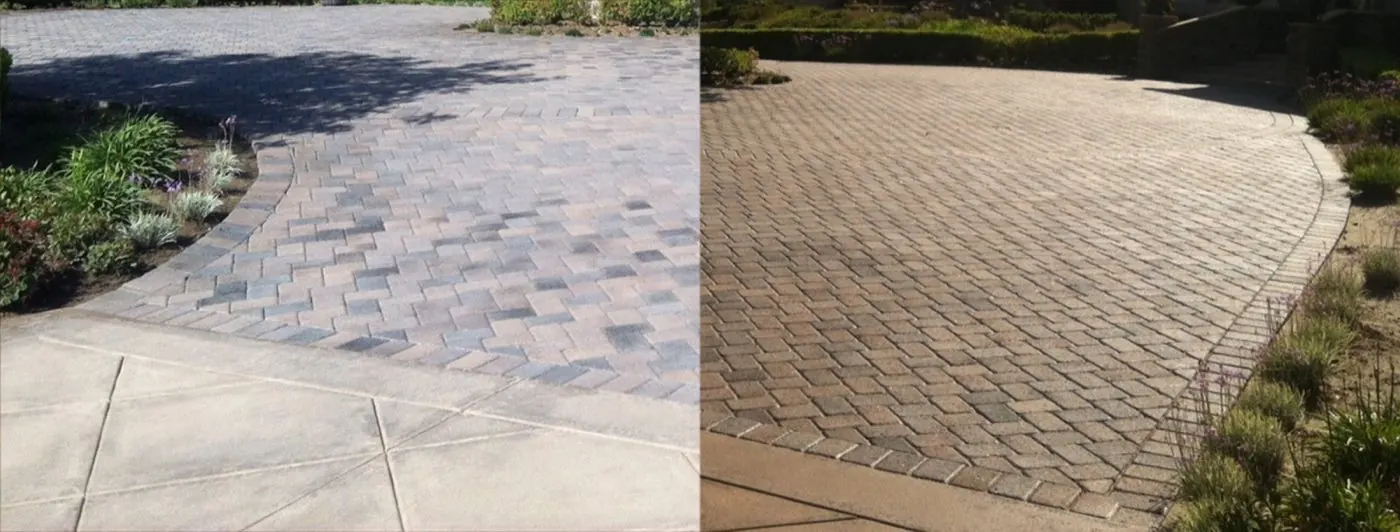
(08) Sealing questions
Asked often.
How much does it cost to seal pavers? +
How often should pavers be sealed in North Carolina? +
Should new pavers be sealed? +
Wet look or matte? +
Can you seal travertine or flagstone? +
How long before I can walk on sealed pavers? +
- When to seal pavers, and how often — What sealing does and does not do in North Carolina.
- Paver patio installation, step by step — Base depths, compaction, edge restraint and joint sand.
- Brick patio ideas that suit Carolina homes — Twelve patterns and layouts, with photos from our own jobs.
Free on-site estimate
Let’s bring the colour back.
Tell us about the patio, driveway or pool deck. We come out, look at the pavers and the joints, and put a written clean-and-seal price in your hands.